

In this post, I share my expert insights and critical tips for exploring the world of Port wine and Douro Valley — from tasting rooms in Gaia to vineyard terraces upriver — so you can enjoy the experience fully while steering clear of the usual tourist pitfalls.
In July 2025, as part of our trip in Portugal, we set out to explore what makes Porto world-famous: its port wine and the vineyards of the Douro Valley. From the historic lodges in Vila Nova de Gaia to the terraced hillsides upriver, the experience is equal parts cultural tradition and polished tourism. Some visits feel intimate and authentic, others run like clockwork for the masses — and the difference can shape your impression of the region. With a professional eye trained in hospitality, I’ll share what really matters when planning wine tastings and vineyard tours: the houses worth reserving, the pitfalls of group excursions, and the moments of genuine charm that still make the Douro unforgettable.
This article focuses on port wine and the Douro Valley — from tastings in Gaia to day trips upriver. If you’re looking for insights on Porto itself, you’ll find those in the dedicated companion article about the city.
🍷 From Cellars to Vineyards: The Experiences That Really Matter
🏺 Port Wine Tastings in Gaia: The Essentials
For centuries, Gaia has been the beating heart of the port trade. While the vineyards grow upriver in the Douro Valley, it was across the river from Porto — in Vila Nova de Gaia — that the barrels were traditionally stored, aged, and shipped. The cooler, more humid climate on this side of the river made it ideal for cellaring, and over time the great port houses established their lodges here. Many were founded or expanded by English merchants, whose 18th-century trade agreements cemented port as a favorite export to Britain. That legacy is still visible today in the names that dominate the hillside — Taylor, Graham, Sandeman — reminders of the strong Anglo-Portuguese ties that shaped this industry.
No trip to Porto feels complete without crossing the Dom Luís I bridge to Gaia to visit the port wine houses. These historic lodges are where the city’s most famous export has been aged and shipped for centuries. Nearly all of them offer a guided visit with a tasting, but one thing to keep in mind: reservations are essential. The most popular houses book out several days in advance, especially in summer. And if you plan to visit more than one in a single day, coordinating schedules can quickly become a headache, as the available time slots are limited and often overlap.
What’s more, not every house offers the same type of experience. Tours can be fully guided, audio-guided, or even self-paced, but timing matters: if you want a live guide, you’ll need to book a slot in your language, and those can be surprisingly limited. The tastings also vary widely. At the basic level, you might sample two or three different styles of port in a common tasting room. At the other extreme, some houses offer exclusive sessions in private salons, pairing older vintages with cheese or chocolate, or even letting you taste very high-end bottles that rarely leave the lodge. Choosing the right option depends on your budget, interest, and how deep you want to go into the world of port.
Most of the major houses are located higher up the hillside in Gaia, clustered around the World of Wine (WoW) district. This recently developed cultural complex brings together several port lodges, along with restaurants, museums, and shops showcasing other Portuguese products. It’s polished and modern, and while it doesn’t have the same old-world charm as the riverside warehouses, it makes Gaia feel like a wine-focused cultural hub.
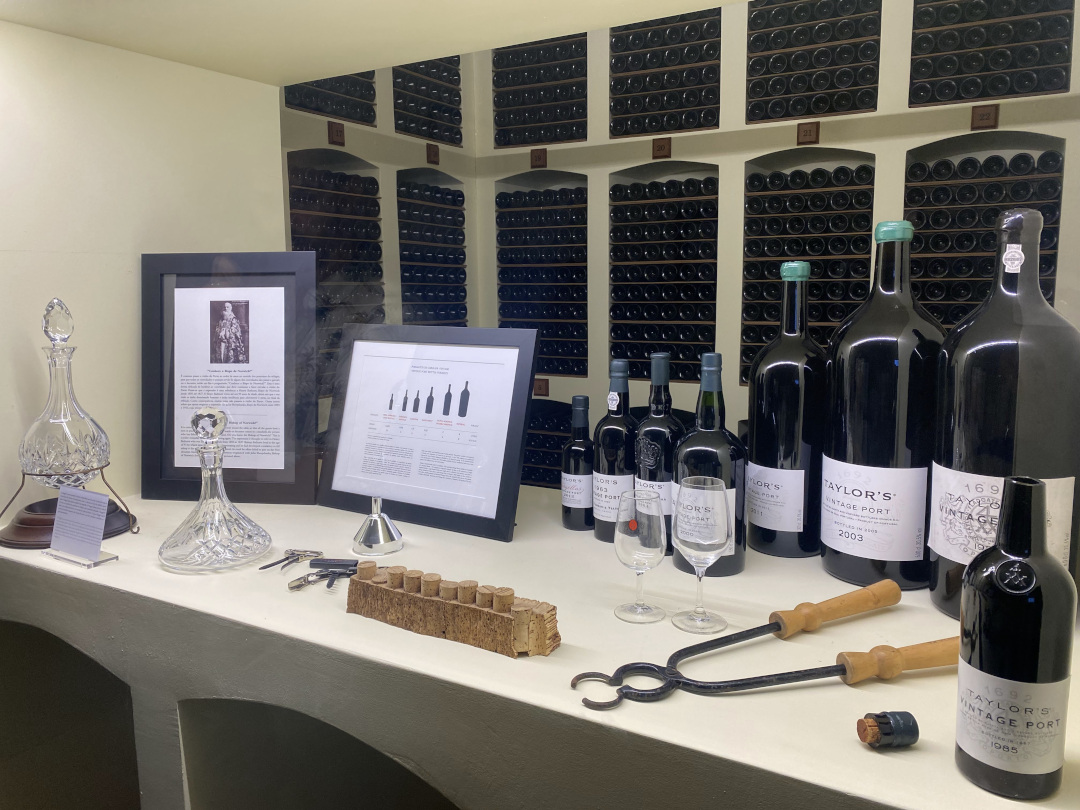
We chose to visit Taylor’s, and it turned out to be an excellent decision. Unlike many other lodges, Taylor’s doesn’t require a strict time slot — the visit is done with an audio guide, which allows you to start when it suits you. The commentary is clear and engaging, covering the history of port wine and the Douro Valley, the evolution of the Taylor’s house, and even their current commitment to sustainability, positioning themselves as leaders in adopting vineyard techniques that reduce climate impact.
At the end of the tour, you move to the tasting session. Like most houses, Taylor’s offers several options. The basic tasting, included in the entry, featured three ports: a 10-year-old Tawny, an extra-dry white port, and a Late Bottled Vintage port. By paying extra, you can upgrade the experience — adding cheese or chocolate pairings and tasting higher-end bottles.
One practical note: make sure to manage your time well. The audio tour is genuinely interesting, and near the end we were told we needed to hurry to make it to the tasting before closing. We rushed through… only to realize once seated that there was still plenty of time to enjoy the wines. It’s a small detail, but one that can make the experience feel less relaxed if you’re not prepared.
In the end, whether you choose Taylor’s or another house, visiting at least one port lodge in Gaia is essential to understand Porto’s identity. Each offers its own mix of storytelling, tasting, and atmosphere — some more commercial, others more traditional. What unites them all is the way they root you in the region’s history and culture. And for those who want to go beyond the city and see where it all begins, the natural next step is to leave Gaia behind and head upriver to the vineyards of the Douro Valley.


🍇 A Day in the Douro Valley: Beyond Porto, Into the Vineyards
If port wine is Gaia’s pride, its soul is found further upriver, in the Douro Valley. Stretching east from Porto, this UNESCO World Heritage landscape is where terraced vineyards cling to hillsides and the Douro River winds lazily below. A day trip here has become one of the most popular excursions from Porto — and for good reason.
Booking the Experience
We booked with Living Tours, a well-established operator. This is the link to the tour we chose. It’s important to note that nearly every company in Porto offers Douro day trips, and while itineraries differ slightly, they tend to follow the same rhythm: scenic drive, vineyard visits, wine tastings, a traditional lunch, and often a short river cruise. Prices and quality vary, but don’t expect exclusivity: this is a shared group experience, not a private tour. The day also starts early — we had to be at the bus stop near the Sé Cathedral by 7:40 a.m. If you’re late, the bus won’t wait. In fact, one couple from our group had to pay for an Uber all the way to Amarante to catch up with us — a costly lesson in punctuality.
What made our day exceptional, however, was our guide — nicknamed Slimmy. A native of Porto, he combined deep knowledge of the region’s history with a surprising personal twist: he’s also a rock musician with several albums and a presence on Spotify. His charisma and storytelling, paired with spontaneous moments of music, created an atmosphere that brought the group together. Instead of just another structured tour, Slimmy turned the day into a shared experience — equal parts educational, entertaining, and memorable. It was actually Slimmy who suggested we head to Jardim do Morro in Gaia on Thursday night, where a live music show coincides with the sunset over the Douro — an experience we describe in our other post.
Amarante
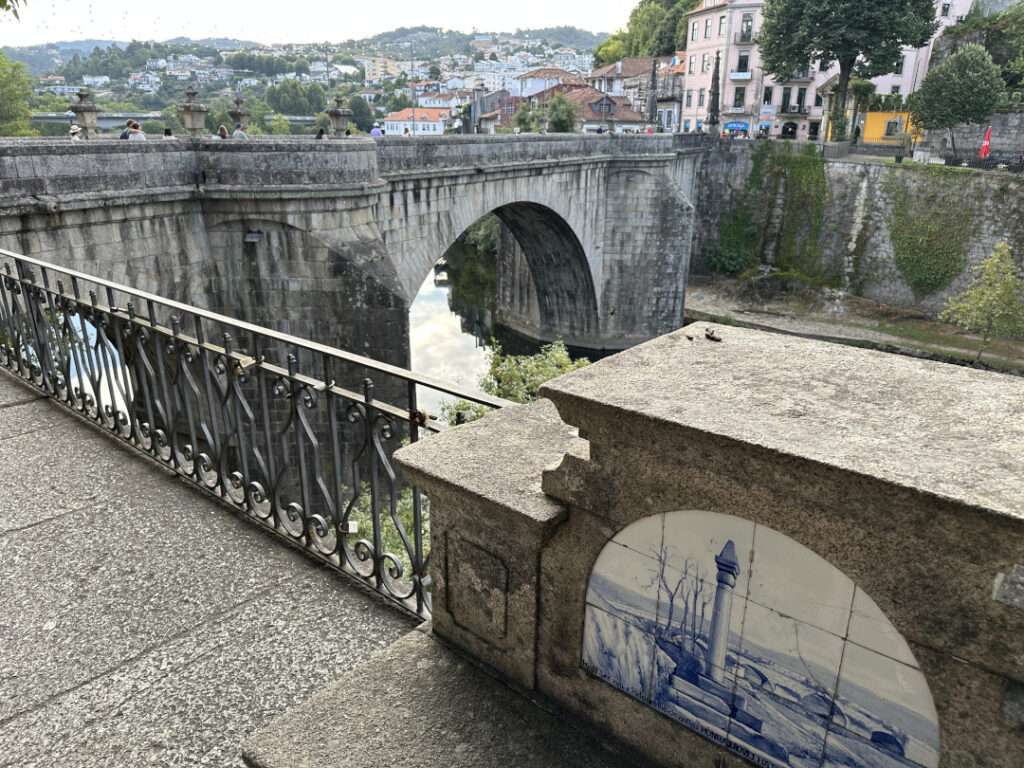
On the way, we stopped in Amarante for a quick coffee break — a town that holds a special place in Portuguese history. During the second French invasion of Portugal in 1809, Napoleonic troops attempted to cross its stone bridge, only to be fiercely resisted by local defenders. The battle delayed the French advance and gave the Portuguese and their allies time to regroup. That same bridge still stands today, a symbol of resilience and a striking backdrop for photos. Stops like this show that the bus is more than just a transfer to the vineyards; it’s also a chance to encounter smaller towns and stories you might otherwise miss, adding depth and variety to the journey.
The Vineyards
The highlight of the day is, without surprise, the visit to the quintas (wine estates). Walking through the terraced vineyards, you get a sense of the sheer effort it takes to cultivate vines on such steep hillsides. The tastings are well structured, usually offering both Douro wines (reds and whites) and different styles of port. Depending on the estate, the experience can feel either intimate and authentic or polished and commercial. In our case, the balance leaned more toward educational than theatrical, which we appreciated.
At Kopke, our guide gave us a thoughtful introduction to the realities of viticulture in the Douro. He explained why vines are planted in different ways depending on the slope, soil, and exposure, and how these choices affect both yield and quality. He also touched on the increasing challenges brought by shifting weather patterns and climate change — a reality that is already forcing growers to adapt their techniques. We were shown different methods of storing and aging the wines, from traditional barrels to more modern approaches, before ending with a tasting of three ports. It was well paced, informative, and left us with a deeper understanding of the craft. Of course, we couldn’t resist bringing a few bottles back with us to enjoy later in the week at our Airbnb.
The day also included a stop at Adega de Favaios, a cooperative winery famous for producing Moscatel do Douro. Though technically not a port, Moscatel shares similarities with fortified wine and offers a different perspective on the region’s traditions. The visit was less about showmanship and more about the collective effort of local growers who keep this style alive. The tasting revealed a sweeter, aromatic profile — a contrast to port, but equally tied to the valley’s identity. It was a reminder that the Douro is not only about port but about a broader winemaking heritage.
Lunch was also included and served at Adega de Favaios. As is often the case with group tours, it wasn’t a gourmet experience, but it was generous and hearty: rustic Portuguese dishes paired with local wine. The setting and the service, more than the food, made the meal memorable.
Pinhão River Cruise
In Pinhão, we boarded a short cruise on the Douro. While often advertised as a ride on a traditional rabelo boat, in our case it was a small motorized vessel with a roof for sun protection and rows of seats — practical, though lacking the charm of the old wooden cargo boats. The 45-minute ride offered sweeping views of the terraced hillsides, with large signs marking the vineyards of famous port houses such as Ferreira and others. It’s impressive to see just how much of the valley is divided among these historic names.
That said, the experience is limited. The boat travels upriver as far as the village of Pinhão before turning back, which means you see the same landscape twice without ever disembarking. Combined with the gentle rocking after a morning of tastings and lunch, it felt more like a pleasant interlude than a highlight.
Even so, the cruise was still worth including as part of the day. It fit neatly into the schedule, and for a short group tour it was a time-efficient way to add another perspective of the valley. If I had to redesign the experience, the ideal option would be to drive into the Douro Valley by bus and return to Porto by boat — a one-way journey that would pass under bridges, follow the river through changing landscapes, and end dramatically back in the city. Unfortunately, none of the tours we researched offered this setup. For now, the short loop cruise remains the standard, and while it won’t be the highlight of your Douro day, it does complete the picture.
The Overall Experience
The Douro Valley is undeniably beautiful — the kind of scenery that stays with you. But travelers should come with realistic expectations. It’s not an off-the-beaten-path discovery anymore; it’s a polished circuit shared with many others. That said, the combination of landscapes, history, and wine makes it one of the few excursions from Porto that truly earns its reputation.


✨ Port Wine and Douro Valley: Key Takeaways
Visiting the world of Port Wine and Douro Valley is about balance. Gaia’s lodges carry centuries of history, blending authentic cellars with carefully polished visitor experiences. The valley itself dazzles with terraced vineyards and sweeping river views, but it’s also a well-oiled circuit shared with many others.
Certain moments stand out: the flexibility of an audio-guided visit at Taylor’s, the educational depth of a tour at Kopke, the sweetness of Moscatel at Adega de Favaios, or simply the view from a valley restaurant where rustic dishes taste better because of the landscape around them. Add to that the charisma of a guide like Slimmy, and a day that might have felt formulaic becomes memorable.
At the same time, perspective matters. Not every tasting feels personal, not every cruise is the romantic rabelo experience you might imagine, and not every tour balances depth with atmosphere. Choosing carefully — and managing expectations — is what makes the difference between a pleasant outing and a truly rewarding journey.
One piece of advice that elevates the experience: before heading out, take time to skim the related Wikipedia pages of the places you’ll visit — whether it’s Amarante, Pinhão, or the Douro Valley itself. Like the Wikipedia links I’ve already put in this blog, they give you quick historical context and make each stop more meaningful.
In the end, exploring Port Wine and Douro Valley means accepting both the polish and the imperfections. The wine is extraordinary, the scenery unforgettable, and the history compelling. Go with discernment, allow room for serendipity, and you’ll return with more than just bottles — you’ll carry the story of a region where landscape, tradition, and culture flow together like the river itself.
👉 You’ll find more stories like this in the Destinations – Portugal section.
Want to learn more?
Join my newsletter!